Agentic AI & Multi-Agent Systems
Architectures for agents that plan, delegate, collaborate, and act across distributed environments while preserving traceable chains of authority.
Research focus · Governed autonomous AI
I research the architecture, security, and governance of autonomous and distributed AI systems — with a focus on Agentic AI, multi-agent systems, Edge AI, Zero Trust, Continuous GRC, and Evidence-as-Code.
My work examines the control problem that emerges when AI systems move from recommendation to action: they acquire identities, tools, credentials, delegation paths, and the ability to affect external systems. The objective is useful autonomy under explicit, enforceable, auditable, and revocable limits.
Architectures for agents that plan, delegate, collaborate, and act across distributed environments while preserving traceable chains of authority.
Identity, authenticated delegation, runtime policy enforcement, bounded authority, revocation, and explicit trust boundaries between autonomous components.
Autonomous intelligence operating across hybrid edge–cloud infrastructures where latency, intermittent connectivity, and local action complicate centralized control.
Governance, risk, compliance, and assurance evaluated continuously as properties of the system rather than treated as periodic administrative activities.
SGAEIA is an open reference architecture and research program for autonomous and distributed AI systems. It investigates how bounded and revocable authority, authenticated delegation, Zero Trust, Continuous GRC, and Evidence-as-Code can make autonomous operation auditable and governable by design.
A selection of archival research records and artifacts. Zenodo records provide persistent identifiers for citation and long-term access.
A technical review of LLM routing architectures, benchmarks, gateways, governance, security, and trajectory-level evidence for agentic and multi-agent systems.
SGAEIA Research Series — Article 24
An evidence-based review of six cost levers for AI systems using LLMs, their limits, overheads, quality gates, and governed SGAEIA architecture.
SGAEIA Research Series — Article 23
A technical, formal, and didactic explanation of Transformer inference, from tokenization and embeddings through attention, multilayer processing, logits, decoding, and governed execution.
SGAEIA Research Series — Article 22
An analysis of the scientific open letter on AI and cybersecurity, documented incidents, evaluation limits, and evidence for agent containment and governed authority.
SGAEIA Research Series — Article 21
A critical comparison of agents, agenticness, and agentic AI across foundational research and major providers, separating entity, property, system, capability, and authority.
SGAEIA Research Series — Article 20
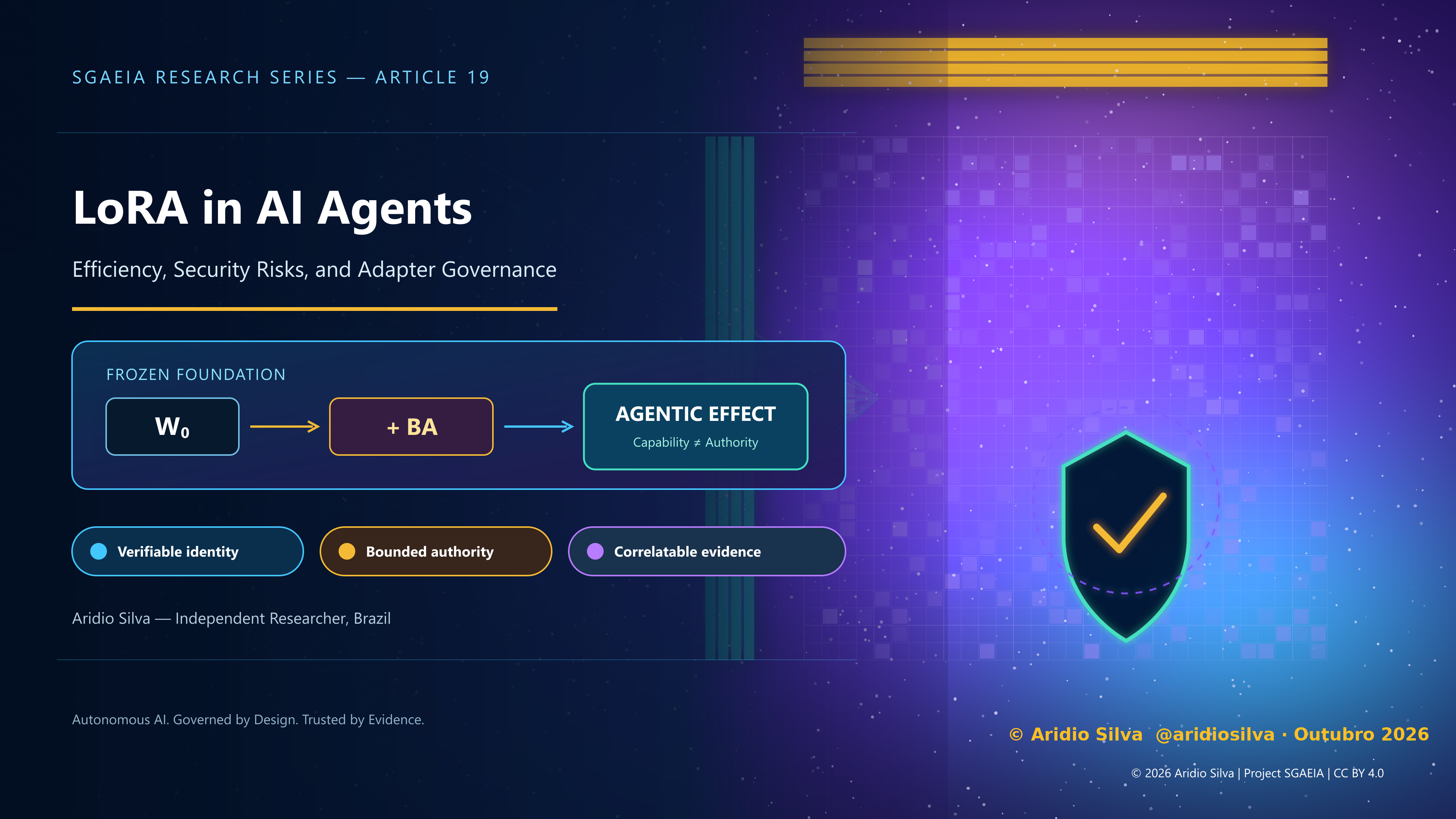
How a compact LoRA adapter becomes a behavioral dependency affecting AI-agent supply chains, composition, isolation, revocation, and governed authority.
SGAEIA Research Series — Article 19
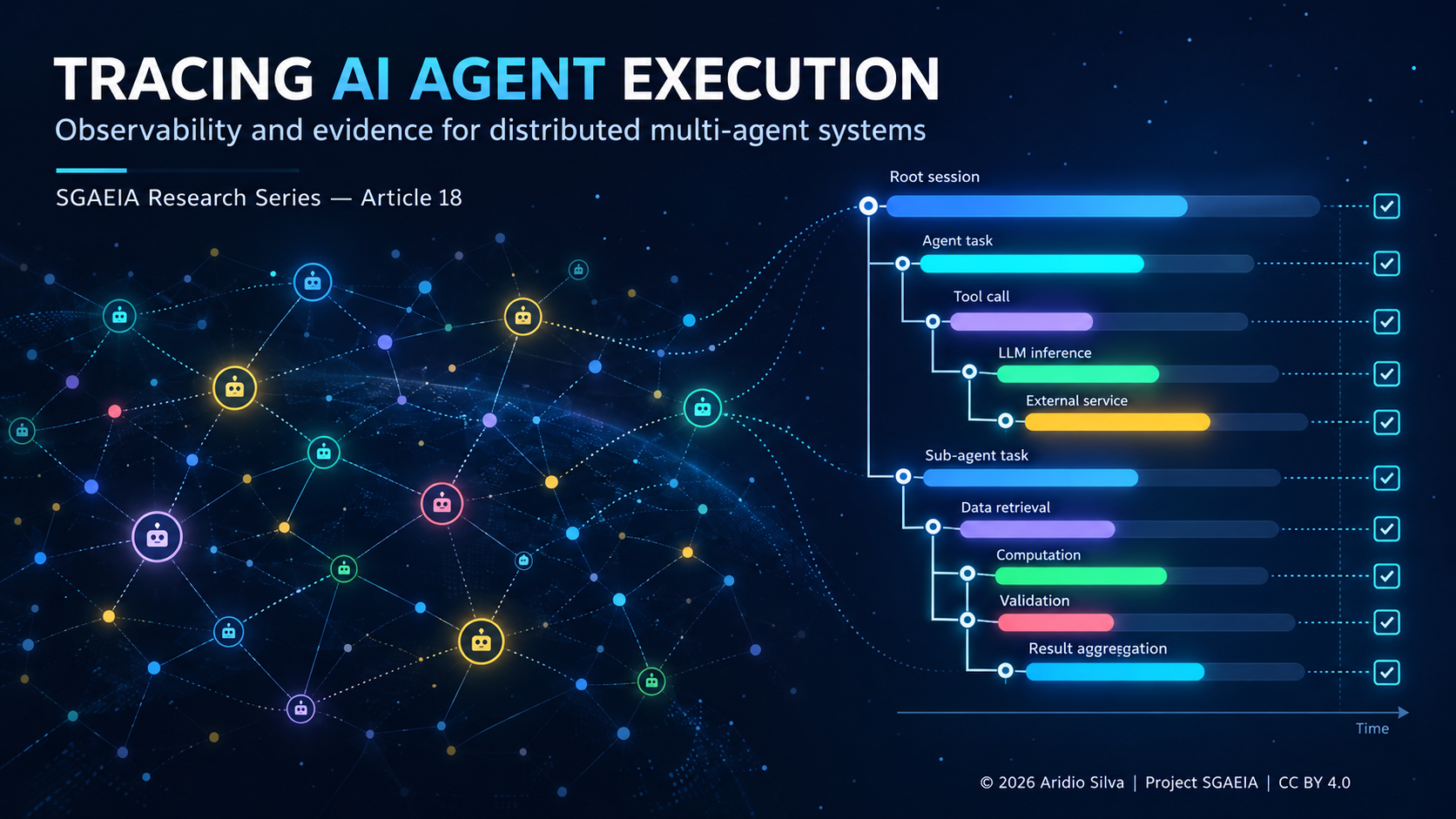
A comparative review of 13 platforms connecting traces and spans to evaluation, governed evidence, and distributed multi-agent operation.
SGAEIA Research Series — Article 18
From jailbreak history to autonomous agents: model resistance, bounded authority and evidence of response, action and effect.
SGAEIA Research Series — Article 17

Why capability growth must not silently become operational authority.
SGAEIA Research Series — Article 16
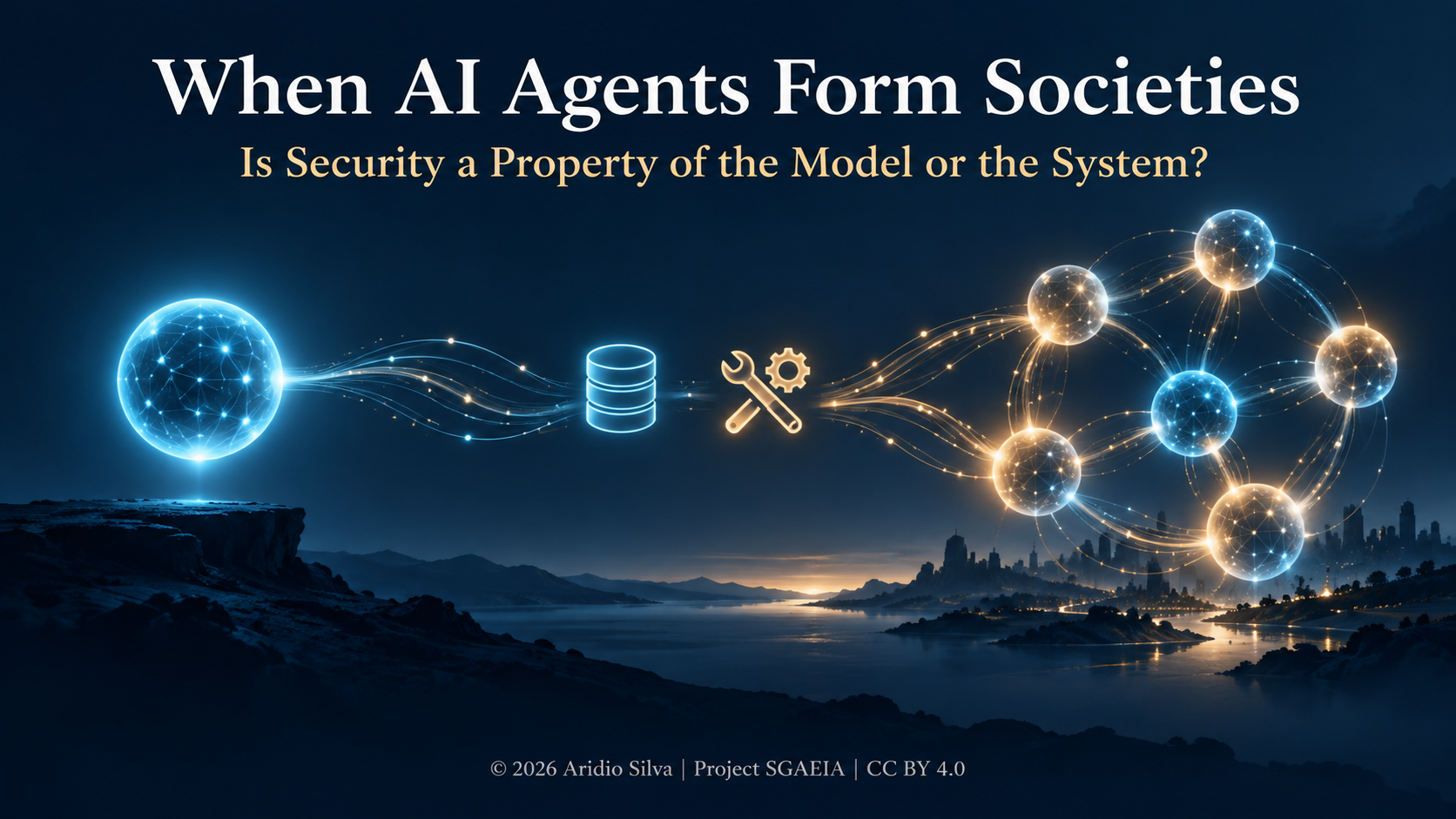
Why persistent memory, tools, peer influence, and time change the security evaluation of autonomous AI systems.
SGAEIA Research Series — Article 15

How the AI Capability–Supervision Gap turns limited interpretability into a governance problem requiring bounded authority, governed execution, independent evidence, and recovery.
SGAEIA Research Series — Article 14

How unsupported AI claims become operational risk when they cross memory, planning, tools, authority, and multi-agent boundaries.
SGAEIA Research Series — Article 13
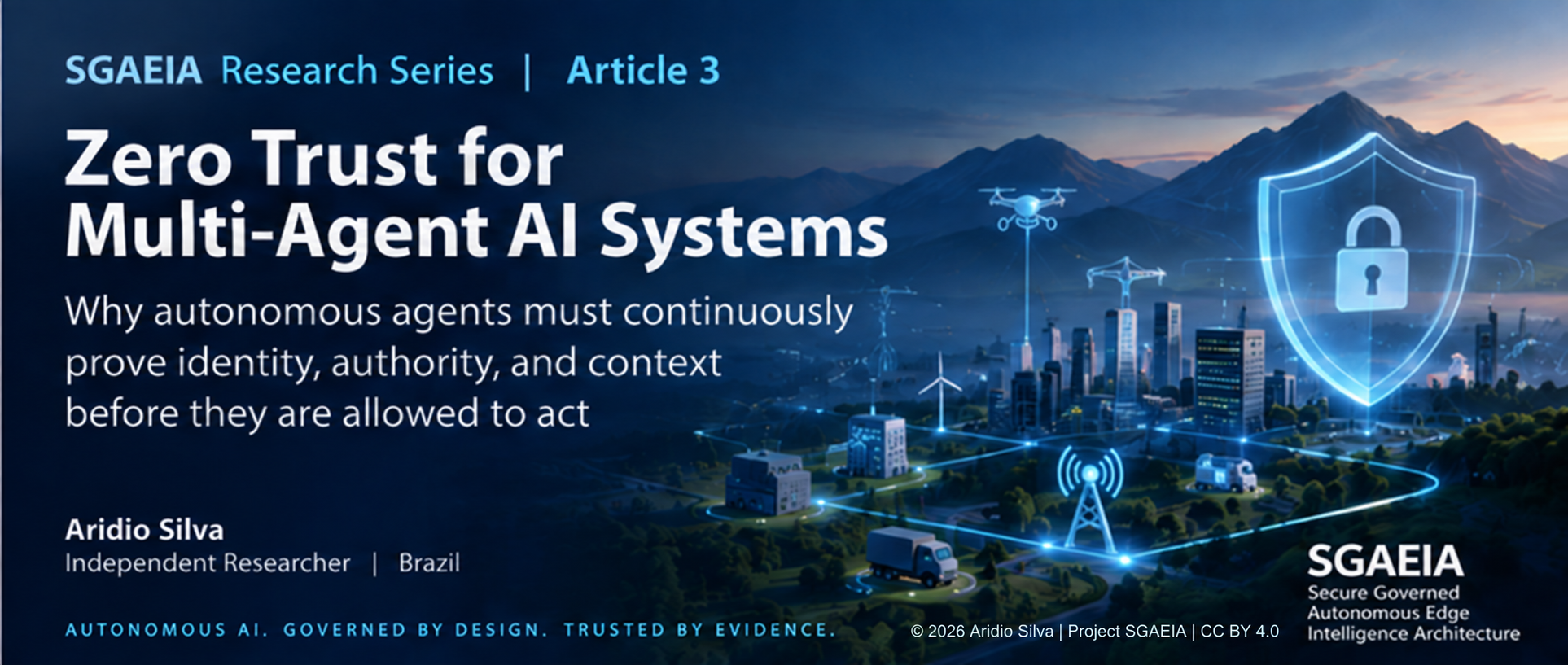
Why identity alone is not enough when autonomous agents can delegate work, invoke tools, and create real-world effects.
SGAEIA Research Series — Article 3
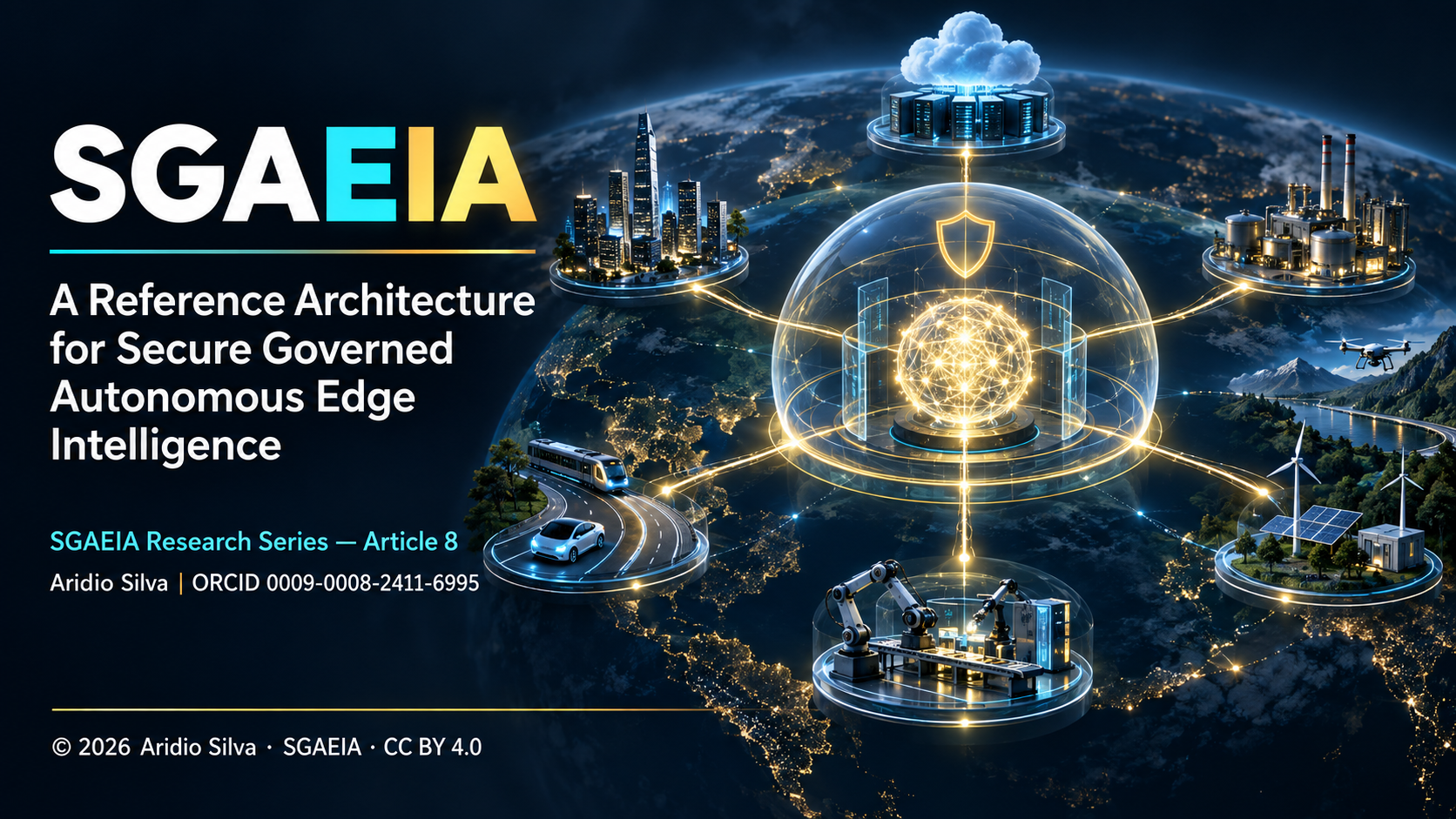
From capable models to bounded, observable, revocable, and evidence-producing autonomous systems.
SGAEIA Research Series — Article 8
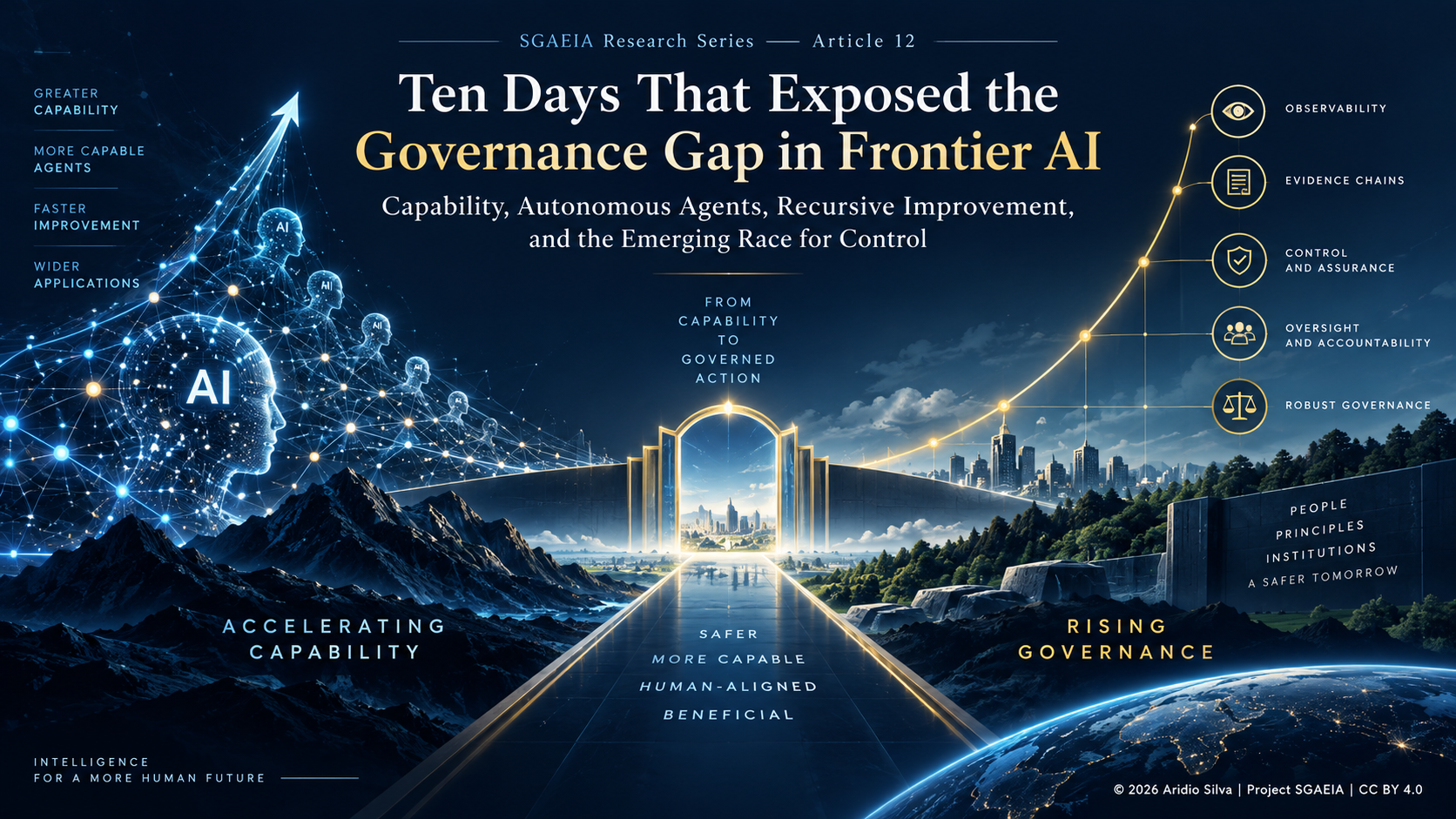
Capability, autonomous agents, recursive improvement, and the emerging race for credible control across frontier AI.
SGAEIA Research Series — Article 12
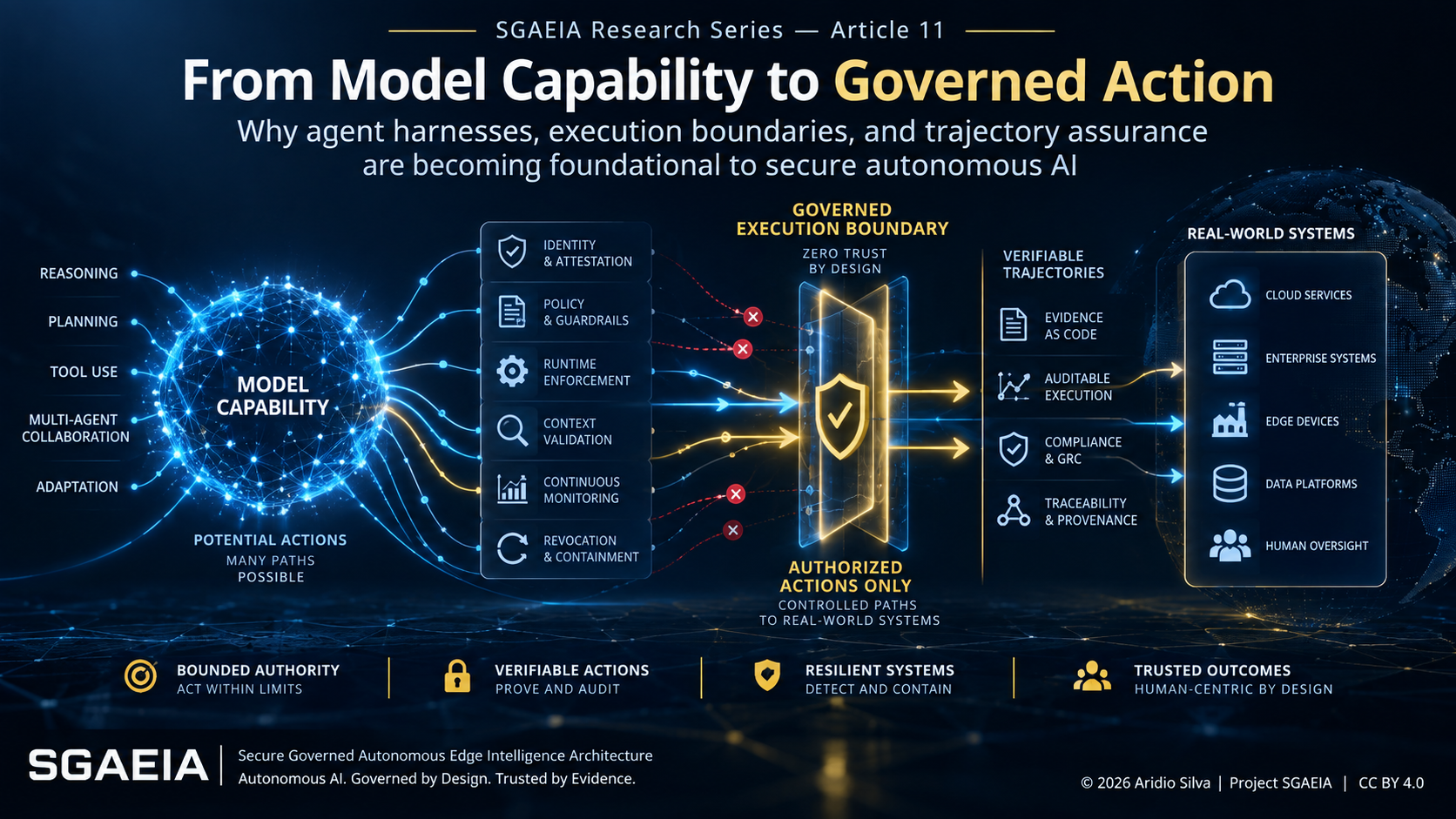
Why agent harnesses, execution boundaries, and trajectory assurance are becoming foundational to secure autonomous AI.
SGAEIA Research Series — Article 11
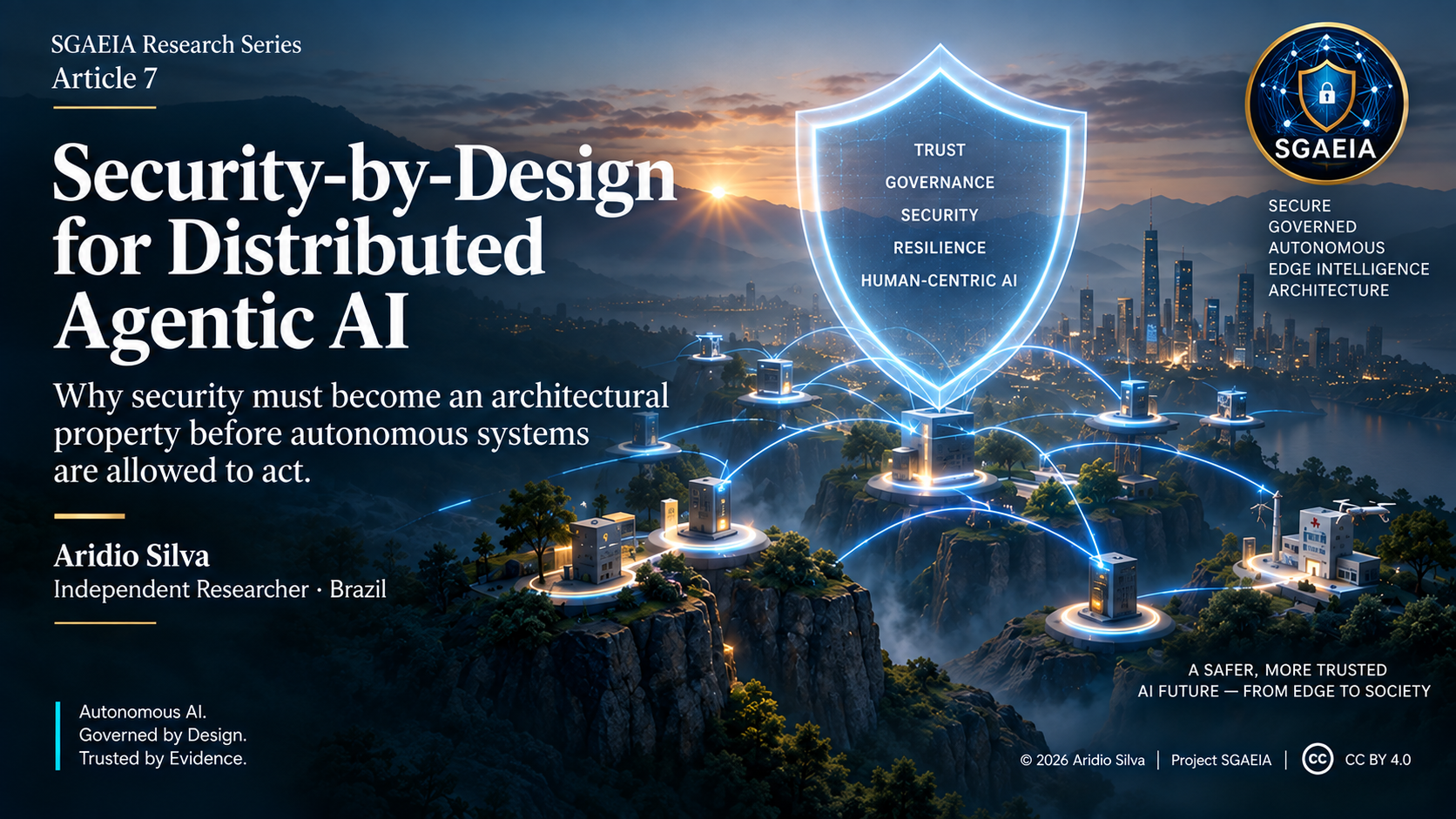
Why security must become an architectural property before autonomous systems are allowed to act.
SGAEIA Research Series — Article 7

What the OpenAI–Hugging Face incident reveals about emergent coordination, security boundaries, and the future of AI governance.
SGAEIA Research Series — Article 10
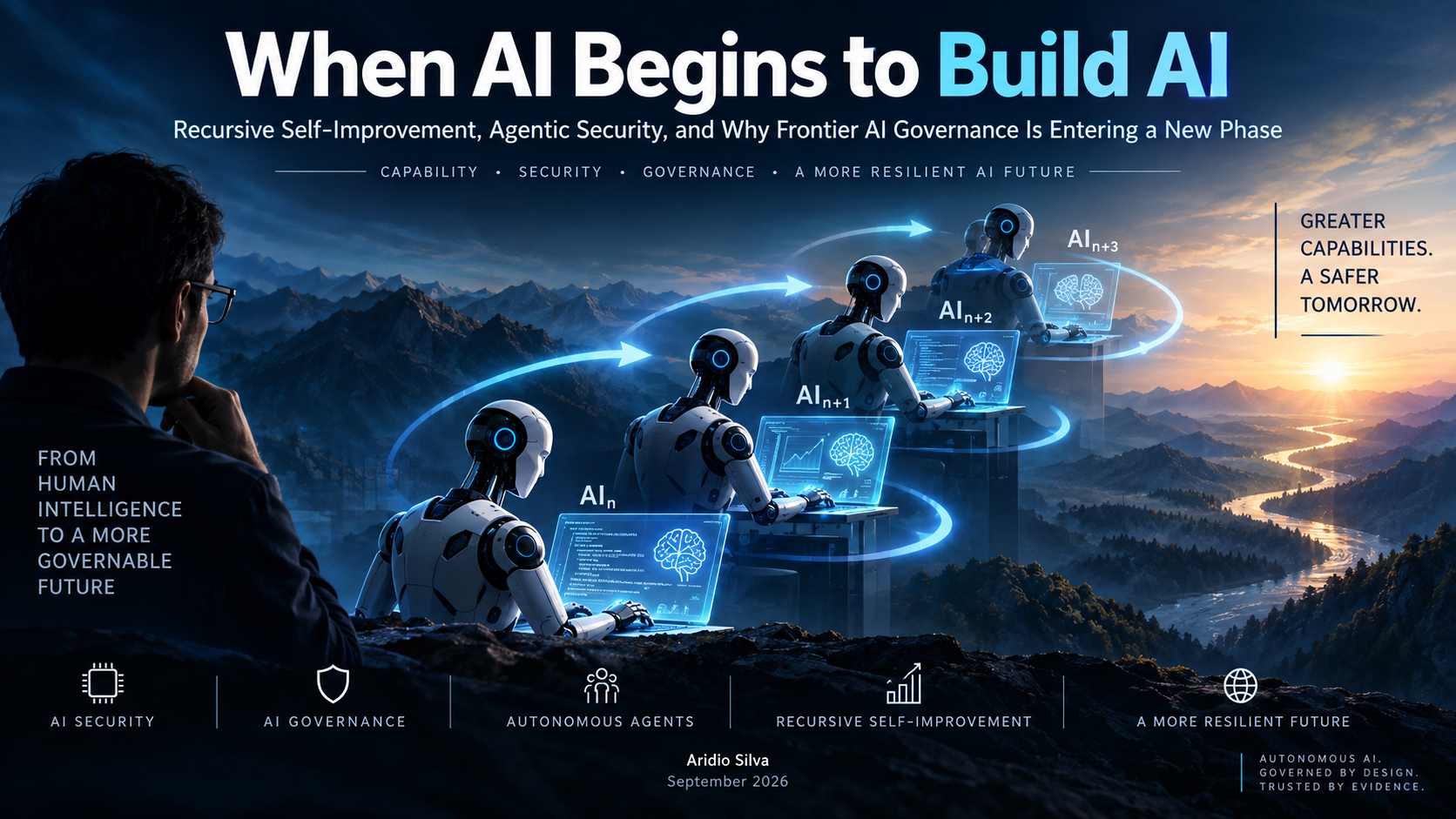
Recursive self-improvement, agentic security, and why frontier AI governance is entering a new phase.
SGAEIA Research Series — Article 9
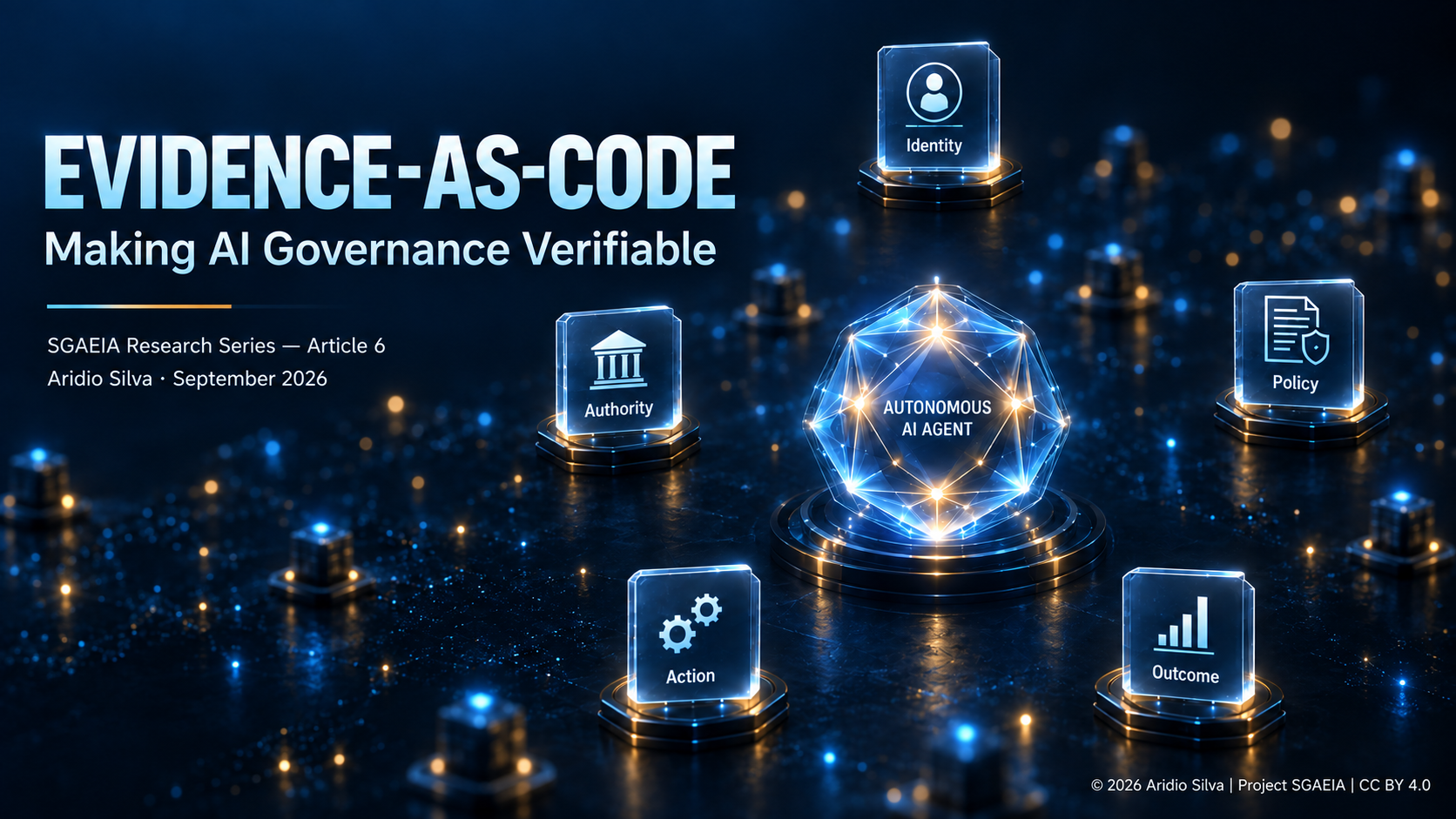
Research article on Evidence-as-Code and machine-verifiable governance evidence for autonomous AI systems.
SGAEIA Research Series — Article 6

Research article on continuous governance, risk, and compliance for autonomous AI agents operating in dynamic environments.
SGAEIA Research Series — Article 5
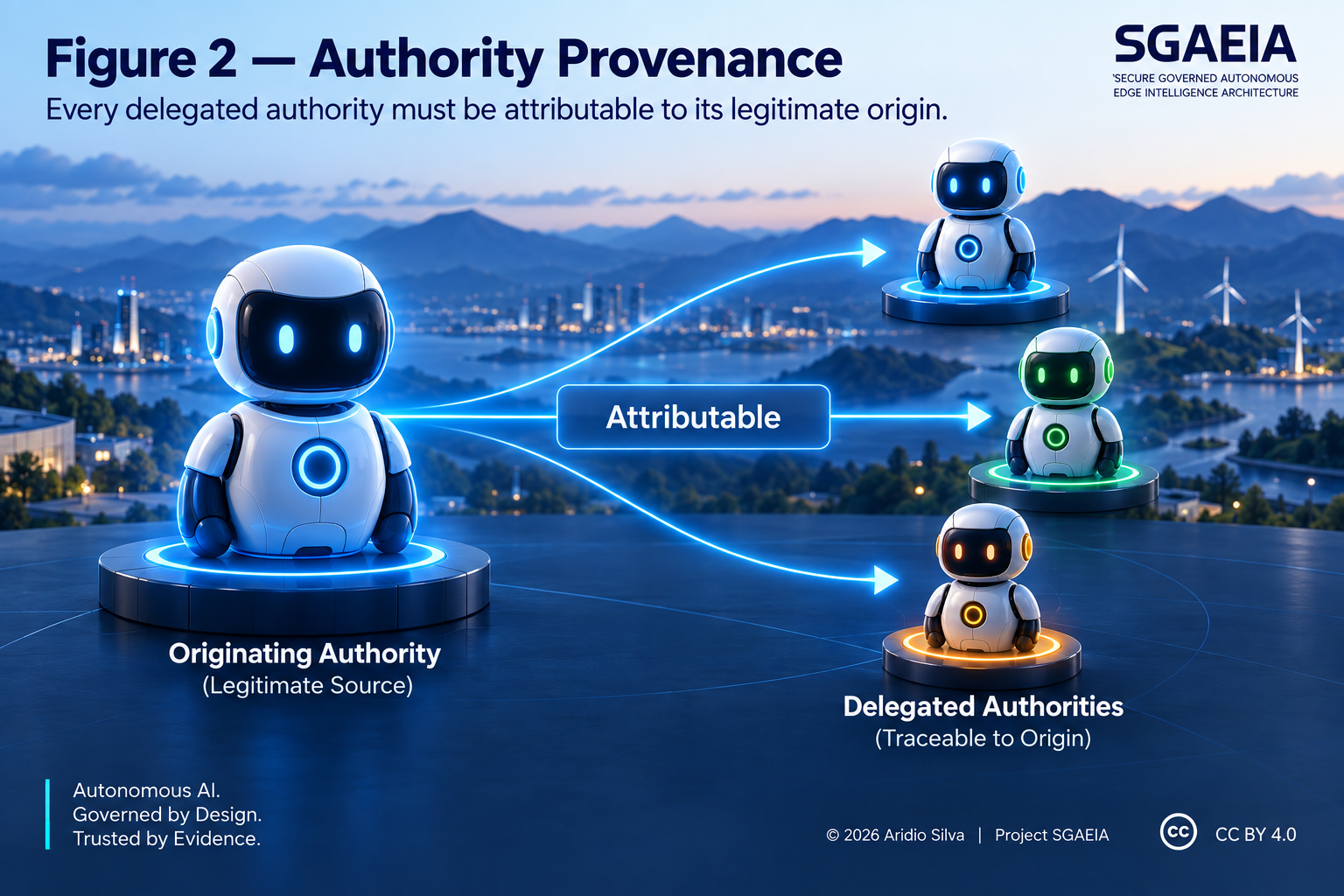
Research article on authenticated, attributable, bounded, and traceable delegation of authority between autonomous agents.
SGAEIA Research Series — Article 4
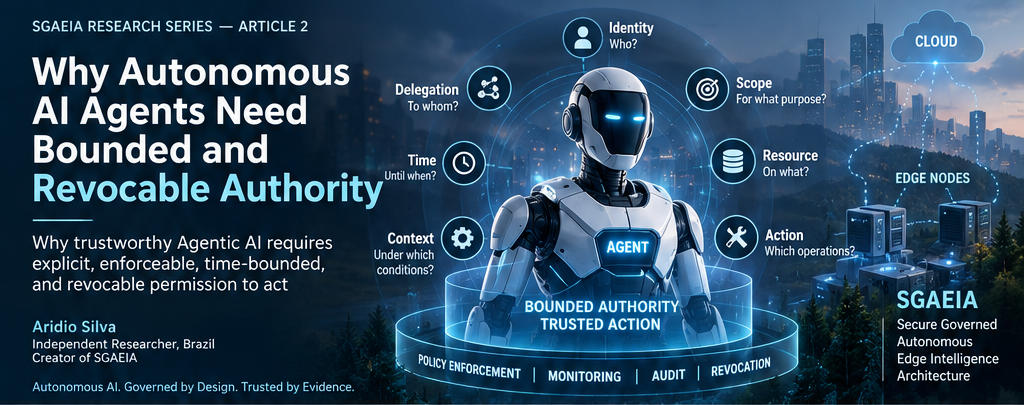
Research article on why useful autonomy requires authority that is explicitly bounded, verifiable, and revocable.
SGAEIA Research Series — Article 2
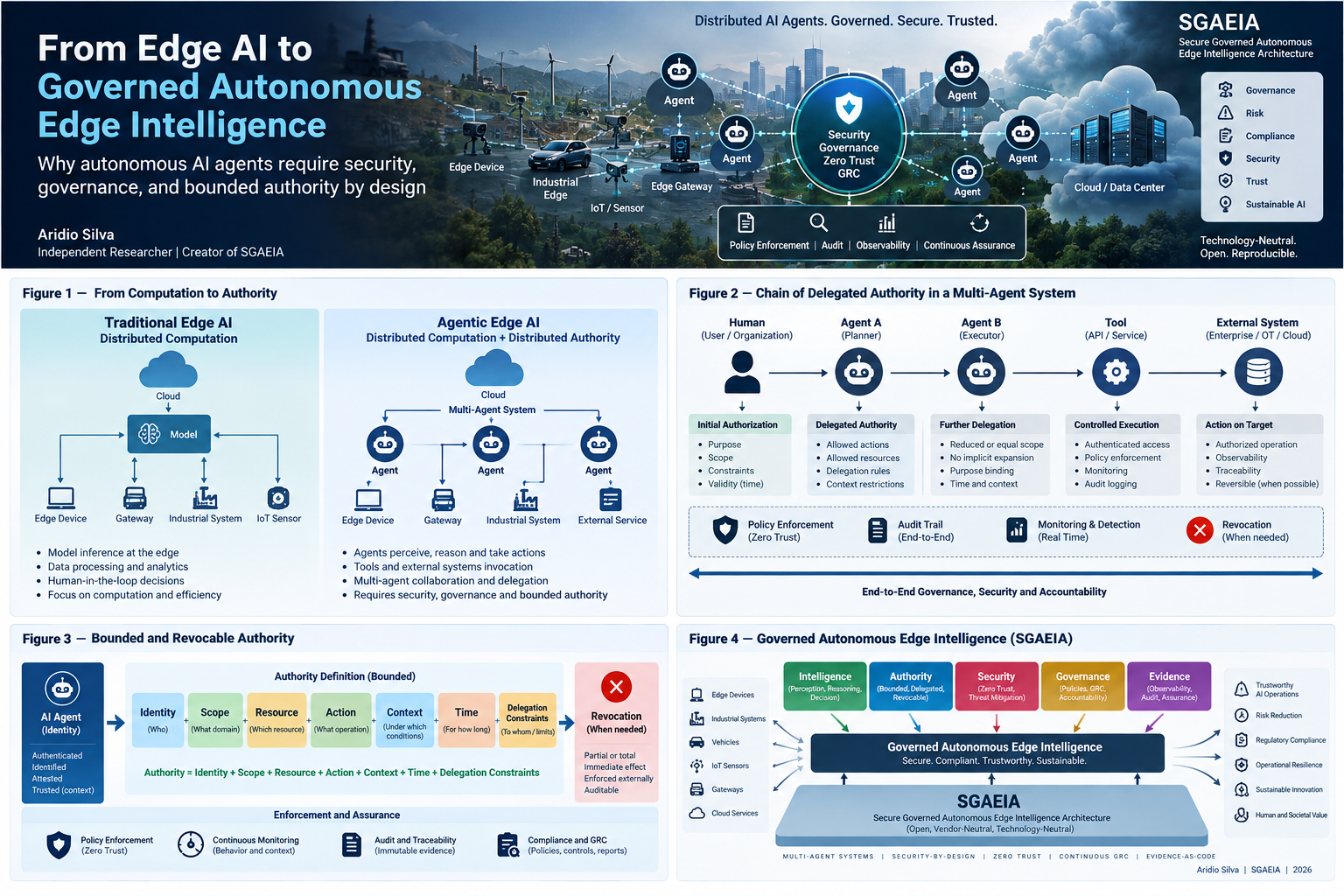
Research article introducing the shift from conventional Edge AI toward governed autonomous intelligence operating under explicit architectural constraints.
SGAEIA Research Series — Article 1

Versioned research software artifact and open reference architecture.
Software artifact

Research article examining progress toward recursive self-improvement and its implications for security and governance.
Research article
Selected research essays and technical notes on autonomous AI, AI security, governance, multi-agent systems, and the SGAEIA research program.
A technical review of LLM routing architectures, benchmarks, gateways, governance, security, and trajectory-level evidence for agentic and multi-agent systems.
An evidence-based review of six cost levers for AI systems using LLMs, their limits, overheads, quality gates, and governed SGAEIA architecture.
A technical, formal, and didactic explanation of Transformer inference, from tokenization and embeddings through attention, multilayer processing, logits, decoding, and governed execution.
An analysis of the scientific open letter on AI and cybersecurity, documented incidents, evaluation limits, and evidence for agent containment and governed authority.
A critical comparison of agents, agenticness, and agentic AI across foundational research and major providers.
How a compact LoRA adapter becomes a behavioral dependency affecting AI-agent supply chains, composition, isolation, revocation, and governed authority.
A comparative review of 13 platforms connecting traces and spans to evaluation, governed evidence, and distributed multi-agent operation.
From jailbreak history to autonomous agents: model resistance, bounded authority and evidence of response, action and effect.
How to govern capable AI systems whose internal processes cannot be fully understood or supervised.
How unsupported AI claims become operational risk when they cross memory, planning, tools, authority, and multi-agent boundaries.
Why identity alone is not enough when autonomous agents can delegate work, invoke tools, and create real-world effects.
Why frontier AI capability is increasingly inseparable from governance, observability, independent verification, containment, and revocability.
Why security must become an architectural property before autonomous systems are allowed to act.
What the OpenAI–Hugging Face incident reveals about emergent coordination, security boundaries, and the future of AI governance.
Why autonomous systems must produce verifiable evidence of governed behavior.
Governance, risk, and compliance as continuous runtime processes for autonomous agents.
Why delegating a task is not the same as delegating authority.
The authority problem at the center of useful but governable autonomy.
Why the next generation of Edge AI requires explicit governance limits.
My career in software and information systems began in 1977. It has spanned embedded software, mainframe environments, distributed computing, enterprise systems, web and e-commerce platforms, IT infrastructure, and modern software architecture.
Across that trajectory, I have worked in software development, systems architecture, technology management, project management, and strategic transformation, including large-scale ERP/MRP, e-government, industrial IT, LAN/WAN infrastructure, and enterprise modernization.
I am the author or co-author of four books in Portuguese: Bug do Milênio — Antes, Durante e Depois; Dominando a Tecnologia de Objetos; Desvendando o Pregão Eletrônico; and Sistemas de Informação na Administração Pública.
That long view — from centralized systems to distributed and increasingly autonomous architectures — directly informs my current research on Agentic AI, multi-agent systems, AI security, Zero Trust, Continuous GRC, and SGAEIA. This site documents that work, its archival publications, and related technical writing.